1835 - 1903
by Richard R. Wilt
I have always been fascinated by the stories my grand father
told me about David Morrow. My grandfather was only 12 when
his mother, a widow, met, married David and she and her three
sons moved from their home on Stiles Run near Metz, WV to
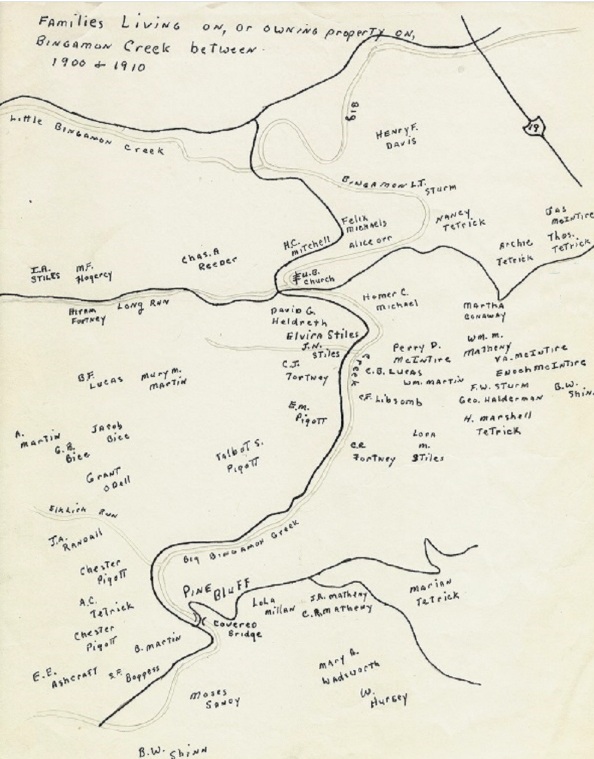
Bingamon Creek at the mouth of Nutter Run in Harrison
County, WV.
David owned a small farm which he and his first wife,
Edith McIntire had owned. David was a well educated man and
was born in West Moreland, PA, but have no indication of
why he came to West Virginia. He was a trained carpenter and a
cooper being an apprentice to his father. He was also trained in
making furniture and being a Herb Doctor probably by experience and self education.
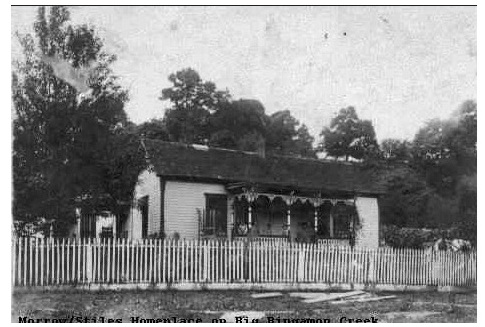 David had a well equipped wood working shop and was very modern by the standards in the late 1800s. He ran a complicated series of
belts run by a small steam engine. When I was young I was in the
workshop that my grandfather had kept in very good working order but was run by a small gasoline engine by the time I came around.
David had a well equipped wood working shop and was very modern by the standards in the late 1800s. He ran a complicated series of
belts run by a small steam engine. When I was young I was in the
workshop that my grandfather had kept in very good working order but was run by a small gasoline engine by the time I came around.
By just moving belts on an overhead system you could run a lathe, cycle saw, band saw and several other pieces of wood working equipment. He also was credited with helping build and maintain the road from Bingamon Juntion and Pine Bluff.
David Morrow (June 16, 1836–April 9 1903), son of Isaiah and Martha Morrow, was listed in Harrison County marriage records as marrying Edith McIntyre on March 13, 1856. Edith was the daughter of Enoch and Sarah McIntyre. David initially worked as a cooper, a trade he learned from his father, but later became a well-known herbal doctor on Bingamon Creek, West Virginia. He was also a skilled woodworker, crafting furniture and caskets, and collaborated with Harmer’s Funeral Home in Shinnston.
In 1858, Edith McIntyre Morrow and her brother, Thomas McIntyre, appeared in Circuit Court to petition against David Morrow to prevent him from disposing of a piece of property located on Bingamon Creek in Harrison County, West Virginia. The property in question was a small farm that Edith had inherited upon the death of her father, Enoch McIntyre, in 1852. While the court records do not indicate a resolution to the dispute, it seems the couple reached an agreement, as David and Edith had three children in the years that followed: their first child in 1858, their second in 1862, and their third in 1867.
By the early 1880s, Edith brought charges of drunkenness against David, which ultimately led to their divorce. At this time, their two daughters, Elizabeth and Sena, had already married and left home. After the divorce, David continued living at the home on Bingamon Creek at Nutter Run with their teenage son, David E. Tragically, David E. died at the age of 23 on August 18, 1890, and the property passed to his father as the nearest relative.
In the late 1880s, David Morrow was introduced to Elvira Elizabeth Stiles, a widow with three sons, in what appears to have been an arranged meeting. The two married on January 25, 1889, and Elvira, along with her three boys, moved into the Bingamon Creek homestead. John Nelson Stiles, one of Elvira’s sons, later wrote a short narrative about moving to Bingamon Creek in 1889 when he was 12 years old. David had one son, David E. born in 1867 and died in 1890 shortly after their marriage.
By 1900, the census for the Clay District of Harrison County, West Virginia, listed the household as follows:
David M. Morrow, age 65
Elvira Morrow, age 55
James C. Stiles, age 17 (Elvira's son)
Festus Shultz, age 11 (boarder, grandson of Elvira)
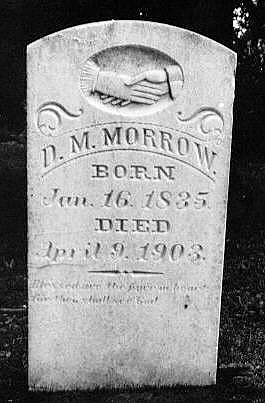 David's stepson, James C. Stiles died of cancer on Aug 13 1902 and David
died Apr 9 1903, and they are both buried in the McIntire Cemetery in Enterprise, WV.
David's stepson, James C. Stiles died of cancer on Aug 13 1902 and David
died Apr 9 1903, and they are both buried in the McIntire Cemetery in Enterprise, WV.
His death certificate lists the cause of death as heart disease and dropsy.
There are large framed pictures of
David E. Morrow and James C. Stiles given to the local Historical Society and
are on display at the Shinn log house in Shinnston, WV.
In his will, David gave the homestead to his two stepsons, John Nelson Stiles, and
his brother Isaac Alburn Stiles and Elvira her lifetime in the property
Elvira remained
in the family home until her death on Jun 3 1919