Telephone
The origins of the telephone date back to the non-electrical string telephone
or "lover's telephone" that has been known for centuries, comprising two
diaphragms connected by a taut string or wire. Sound waves are carried
as mechanical vibrations along the string or wire from one diaphragm to the other.
The classic example is the tin can telephone, a children's toy made by connecting
the two ends of a string to the bottoms of two metal cans, paper cups or similar items.
The essential idea of this toy was that a diaphragm can collect voice sounds from the
air, as in the ear, and a string or wire can transmit such collected voice sounds for
reproduction at a distance.
Alexander Graham Bell is commonly credited as
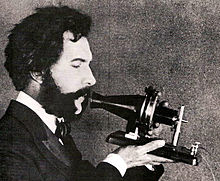 the inventor of the first practical
telephone. The classic story of his crying out "Watson, come here! I want to see
you!" is a well known part of American history. Bell was the first to obtain a
patent, the inventor of the first practical
telephone. The classic story of his crying out "Watson, come here! I want to see
you!" is a well known part of American history. Bell was the first to obtain a
patent,
 in 1876, for an "apparatus for transmitting vocal or other sounds
telegraphically", after experimenting with many primitive sound transmitters and
receivers. Bell was also an astute and articulate business man with influential
and wealthy friends. in 1876, for an "apparatus for transmitting vocal or other sounds
telegraphically", after experimenting with many primitive sound transmitters and
receivers. Bell was also an astute and articulate business man with influential
and wealthy friends.
There were telephones around in service long before I was born and the Shinnston
area had a very good telephone operation. I can remember to make a call all you
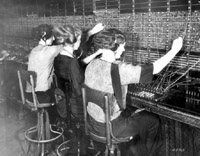
and to do was pick up the phone and a lady
 would come on and say "number please"
and all you had to do was give her the number and she would connect you. Even
if you didn't know the number all you had to do was ask for someone by name and
it never failed, the operator knew the number and gave it to you or just connected you to your party. would come on and say "number please"
and all you had to do was give her the number and she would connect you. Even
if you didn't know the number all you had to do was ask for someone by name and
it never failed, the operator knew the number and gave it to you or just connected you to your party.
In rural areas the telephone seemed to be always a party line with as many as 15
individuals on the same line. While you were talking anyone on the party line
could pick up their phone and listen to the conversation. This was used to keep
up with the local information or gossip.
 Sometimes it resulted in small feuds between
party line customers. Lots of bad words were used and heated arguments.
The phones normally had hand cranks and you would call your party line friend
by using a combination of short and long rings so everyone would have to listen
to the number of short and long rings and in what order to know if they or their
neighbor was being called so it made it much easier to just pick up the phone and
ask who it was and who they were calling. Usually one party on the party line had
a telephone switch board in their home and could connect you to the outside world
to the main telephone system. Sometimes it resulted in small feuds between
party line customers. Lots of bad words were used and heated arguments.
The phones normally had hand cranks and you would call your party line friend
by using a combination of short and long rings so everyone would have to listen
to the number of short and long rings and in what order to know if they or their
neighbor was being called so it made it much easier to just pick up the phone and
ask who it was and who they were calling. Usually one party on the party line had
a telephone switch board in their home and could connect you to the outside world
to the main telephone system.
Next came the 4 party line on a local system and you and one party could hear
any of the other 3 parties but only one line would ring on your phone, normally
these phones rang by just a one long and one short ring or one short and one long
so it made it much easier for you to know who was being called.

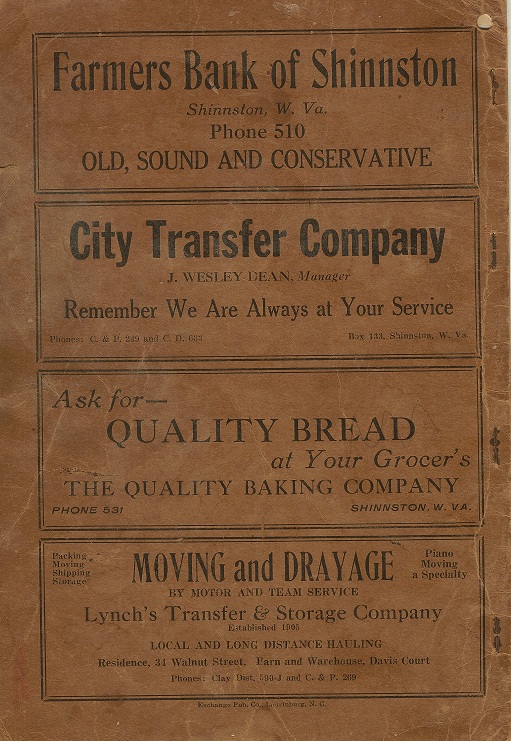
Shinnston, where I grew up had a well established telephone system in 1930 with
a large number phones on the system.
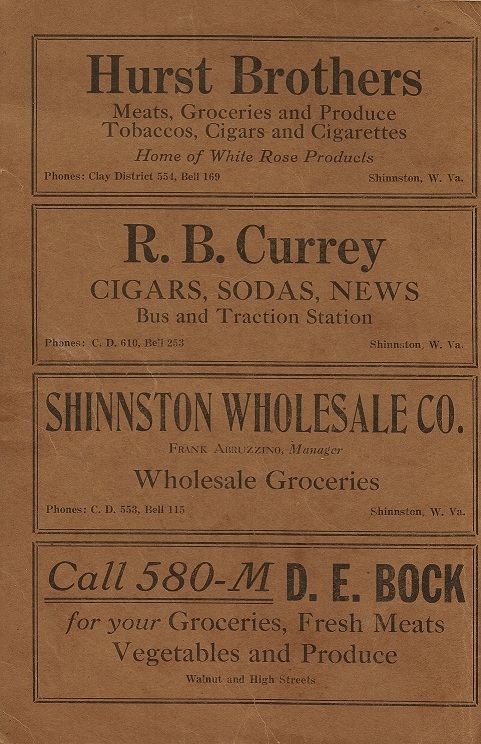
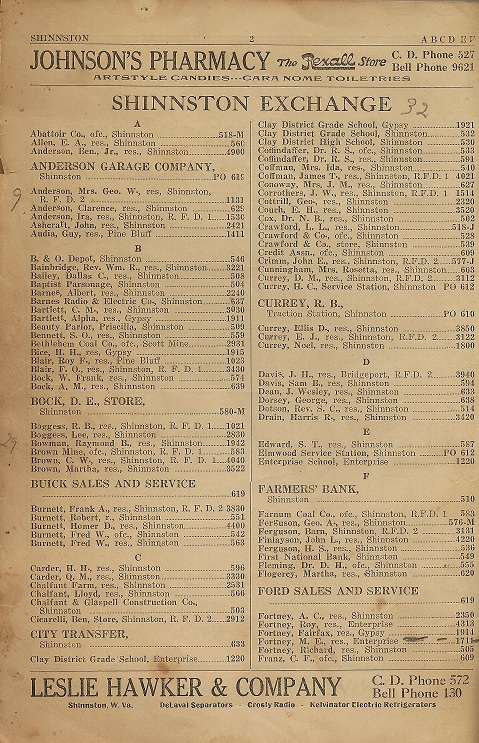
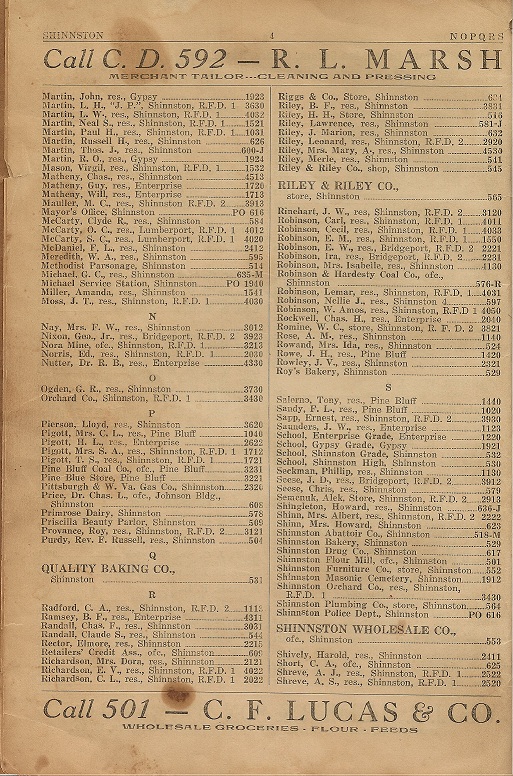
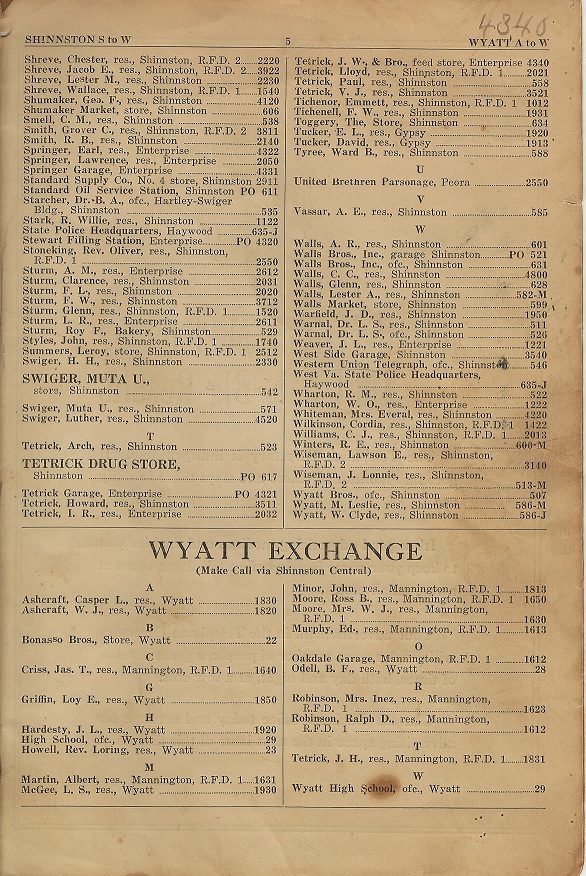
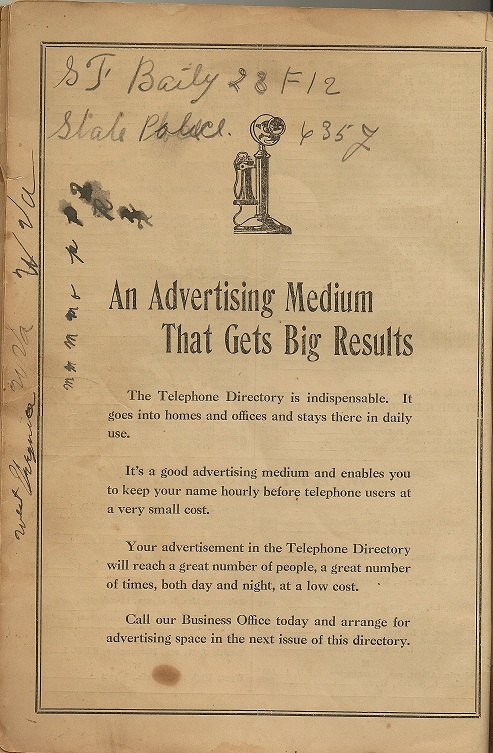
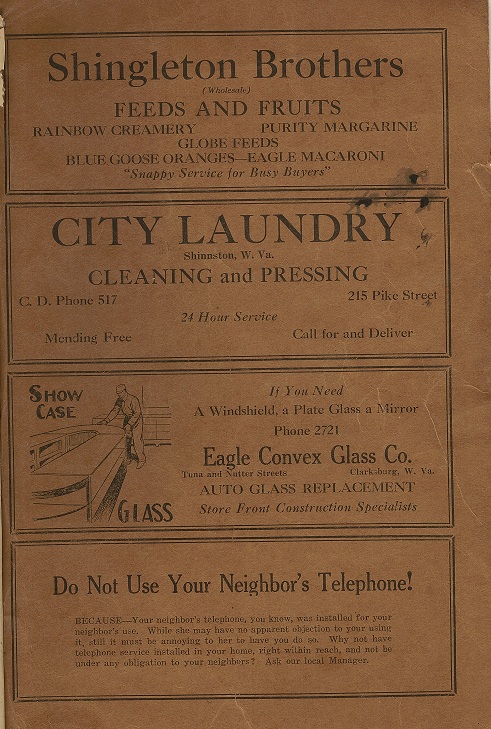
The following is a copy of the Shinnston, WV Telephone Book published in 1930.
I hope you will be able to look up and see if someone in your family had a phone
in the Shinnston area in 1930.



Now this is what we use, and the service isn't any better than it was
over 80 years ago, just more convienent or is it.

Just what would you do if there is an emergency and the telephone system
as we know it today goes dead?
"When all else fails,there is Ham Radio"
Return to
Main Page- - - - -
My Stories
|